Analytical Method Validation for Commercial QC
Poster Authors:
Neve Bentley, Natalie Hunter, Gülnihal Yapici, Nick Lavin, Jamie Connolly
Download Poster: Analytical Method Validation for Commercial QC
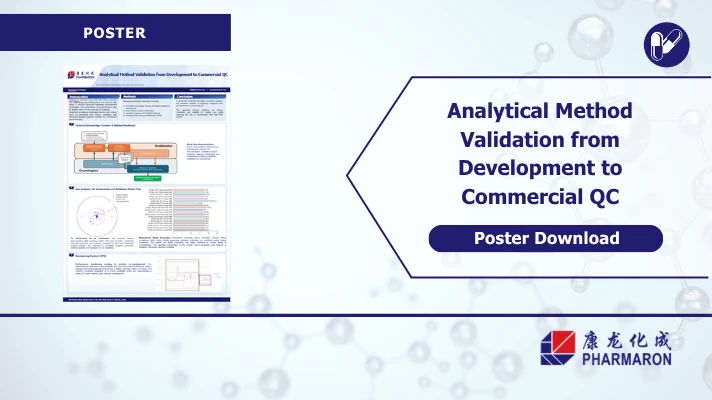
Successful Analytical Method Validation starts long before formal validation studies begin. This poster outlines how Pharmaron applies a lifecycle approach to method transfer, combining technical knowledge transfer, readiness assessments, risk-based decision making and ICH Q2(R2)-aligned validation practices. By integrating development knowledge with Commercial QC requirements from the outset, methods can be transferred more efficiently and prepared for routine use with greater confidence.
Key Takeaways
A robust Analytical Method Validation strategy depends on more than meeting regulatory requirements. Effective method transfer requires alignment between development and receiving laboratories, early identification of potential gaps, and ongoing performance monitoring throughout the method lifecycle. By incorporating risk assessments, validation readiness reviews and Continued Performance Verification (CPV), organisations can support successful Commercial QC implementation while reducing the likelihood of OOS and OOT events.
Capabilities
Key Results
The Analytical Method Validation approach demonstrated measurable improvements in method performance and transfer readiness. Updated transfer datasets showed reduced variability, improved precision and stronger agreement between laboratories. Robustness screening identified mobile phase composition as the critical control parameter, enabling a focused, risk-based validation strategy. Lifecycle monitoring also confirmed that method redevelopment activities successfully reduced variability and established a stable, Commercial QC-ready analytical procedure.
Why Pharmaron?
Pharmaron supports Analytical Method Validation through integrated analytical development, method transfer, validation and Commercial QC capabilities across sites in the UK, China and the US. Our teams combine scientific expertise, structured receiving-laboratory workflows and lifecycle management principles to help clients move analytical methods confidently from development into routine QC operations. This connected approach helps ensure methods remain compliant, reliable and fit for purpose throughout their lifecycle.