4th Chemistry for Life Science Symposium
Capabilities
Author: Robin Bodicoat, Director of Marketing
A Key Opportunity for Networking, Learning and Fresh Perspectives
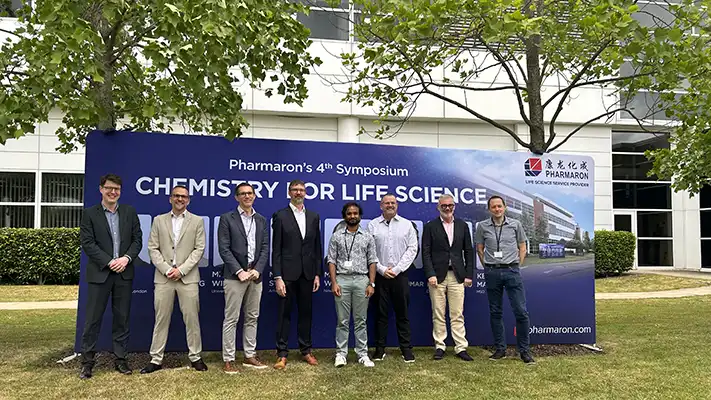
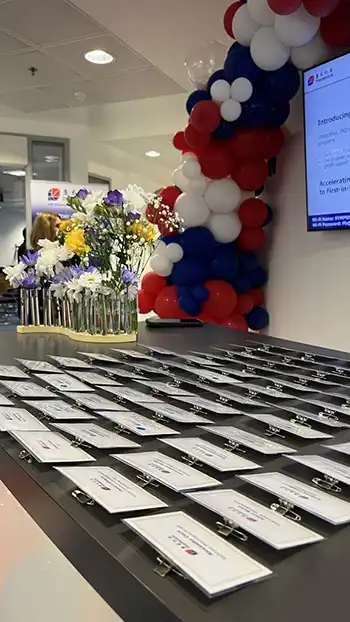
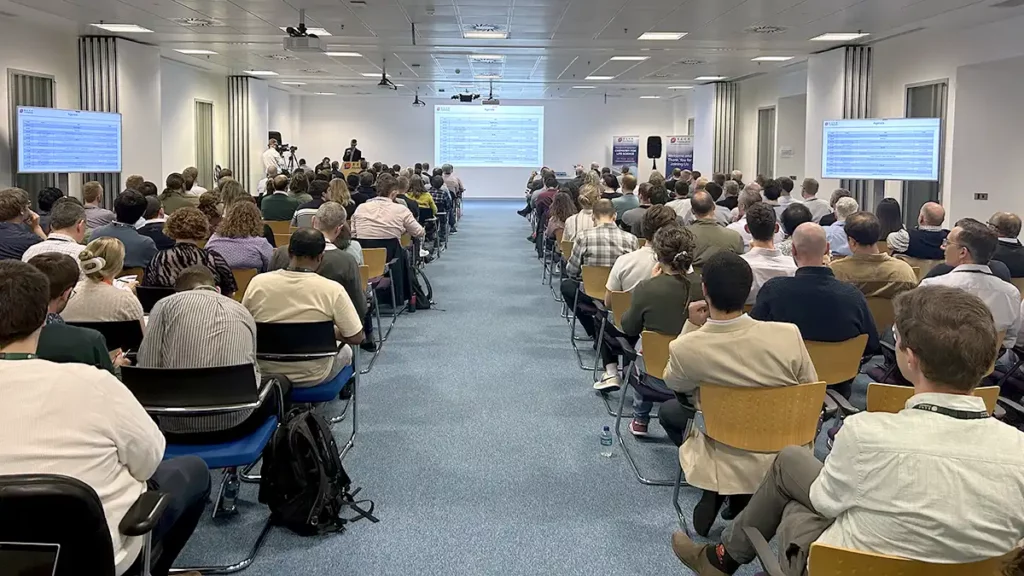
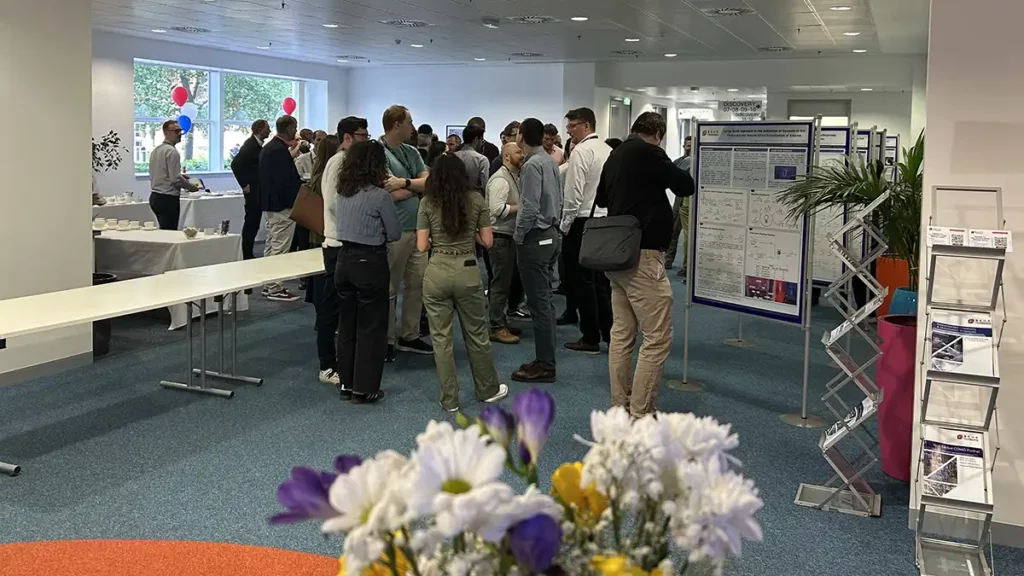
The 4th Chemistry for Life Science Symposium was held on May 20th 2026, at the Pharmaron Hoddesdon site, bringing together the best and brightest minds from both academia and industry. As well as in-person delegates from both Pharmaron and our key partners, we were also joined online by colleagues from Pharmaron sites in China and the United States.
The symposium started with a warm welcome to all guests from Dr Jeremy Scott, Vice President and Head, Process and Analytical Chemistry at Pharmaron, who noted during his welcome speech that while there have been huge leaps forward in drug discovery in recent years, there are still challenges to the delivery and development of new drugs and therapies for patients. These challenges can only be overcome through adopting a growth mindset and learning from others, which were key themes across the day and consistently underscored as integral to the success of the projects discussed.
Over the course of eight speakers, a range of topics were uncovered, including:
- Prof. James Bull (Imperial College London) discussing his group’s work on the development and installation of small heteroatom-containing rings within pharmaceutically-active species to access new chemical space
- Dr. Martin Rosenberg (Novo Nordisk) uncovering the risks of using DMSO as a substitute for DMF within solid-phase peptide synthesis (SPPS)
- Prof. Michael Willis (University of Oxford) showcasing his group’s work towards the discovery and use of novel functional groups within pharmaceutical development
- Dr. Martin Stockley (Artios Pharma) outlining scalable approaches for the synthesis of DNA Pol θ inhibitors
- Prof. Mike Waring (Newcastle University) highlighting the use of targeted covalent inhibitors, and key aspects to consider during data analysis and interpretation
- Dr. Gagan Santhakumar (AstraZeneca) giving an overview of large-scale peptide manufacture, alongside key environmental considerations
- Dr. Garry Pairaudeau (Dalton Therapeutics) looking back on 10 years of AI within drug discovery
- Dr. Kevin Maloney (MSD) providing examples of large-scale biocatalysis development and use within API manufacture.
The quality and value of the bi-annual Pharmaron symposium in Hoddesdon was reflected in feedback from attendees.
“The opportunity to present work to industrial colleagues is invaluable for influencing our academic work in the development of new synthetic approaches to pharmaceutically-relevant materials, and exploration of new chemical space.”
— Prof. James Bull
It was great to share the stage with my peers from across industry and academia. We all share one common goal: the discovery, development, and commercialization of innovative medicines. As in previous years, it was a very enjoyable and well-organized event, and the talks from my fellow speakers were excellent. I look forward to the next event!”
— Dr. Martin Stockley

Key takeaways from the Chemistry for Life Science Symposium
While every talk led to a multitude of questions from the floor, there were several key takeaways and themes that ran throughout the day: exploration of new chemical space by development of novel functional groups is rapidly becoming a key tool within drug discovery; green chemistry approaches are becoming embedded as best-practice in the industry; and the use of AI, which, while being a powerful tool is not a golden bullet, and there are still substantial challenges to overcome when designing and developing a drug to take to market.
Green chemistry approaches
Green chemistry and sustainability are both key agenda items within the pharmaceutical industry, and both were discussed in several talks. However, adapting processes to improve their green credentials is not without its challenges – particularly within the synthesis of peptides – and was consistently highlighted by several speakers.
- Replacement of DMF in SPPS, which may look simple of paper, can lead to altered reactivity of both reagents and of product stability, leading to potential by-product formation.
- PMI can be significantly reduced through removal of chromatographic separations and exploitation of crystallization purification where possible, as well as the use of biocatalytic cascades.
AI as a tool for drug discovery
The use of AI in drug discovery is gaining momentum, holding great promise for future drug discovery. Since 2010 there has been substantial proliferation of AI tools available for synthetic chemists with over 12,000 currently available, but this choice can be overwhelming and still requires expert input. It was proposed that the successful use of AI in drug discovery requires three mind-set changes:
- Redesigning workflows to facilitate AI use, for example by defining goals, executing end-to-end workflows and reviewing outputs, and suggesting changes.
- Acceptance that what is learned during each iteration is more important than the prediction strategy and accuracy of the model.
- That expert input is always going to be needed, which was referred to as ‘the lab-in-the-loop’.
The 4th Chemistry for Life Science Symposium was a resounding success, with excellent feedback from all those who attended. This year’s meeting was over-subscribed – testament to the quality of the speakers and the science discussed.