CAR Expression: Bioanalytical Strategies for Cell Therapy Programs

Capabilities
Author: Thomas Klem, Senior Director of CGT & Biologics
Advanced Therapy Medicinal Products and Bioanalytical Challenges
Advanced Therapy Medicinal Products such as engineered T cells and CAR-T cells create unique bioanalytical challenges. These are developed from patient cells to treat oncological or autoimmune conditions, targeting cancer cells in the former or preventing recognition by the patient immune system in the latter.
Not only are the therapies unique to each patient, they are cells rather than biologics produced in a bioreactor or synthetic molecules like oligo therapeutics. As living entities, the pharmacokinetics, or more properly, cellular kinetics, are more complex than for other therapeutic types. Monitoring of cellular kinetics must account for a latent period after administration, an expansion phase, then a period of persistence during which time the engineered cells carry out their function.
Anti-drug antibodies (ADA) to cell therapies are monitored and evaluated using the plate-based and tiered immunogenicity strategy typical of biologics alongside flow cytometric approaches that exploit the cell surface expression of CARs for detection of ADA. Potential risks associated with engineered cell therapies are pre-existing antibodies to structural elements of the CAR and impact of ADA to expansion and persistence of the therapy after administration.
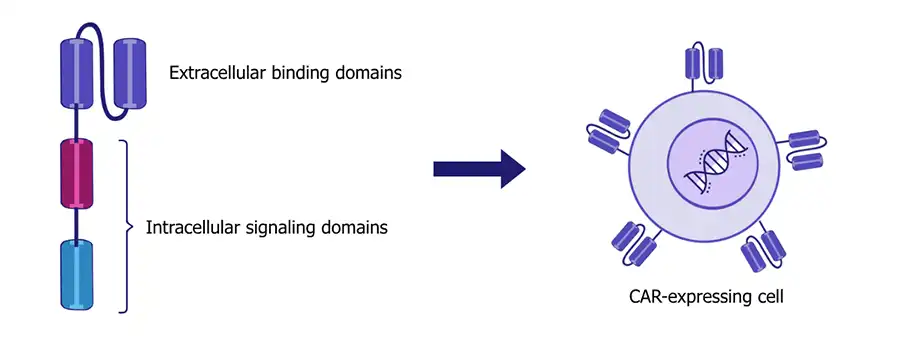
Structure of a CAR
Cellular Kinetics Monitoring
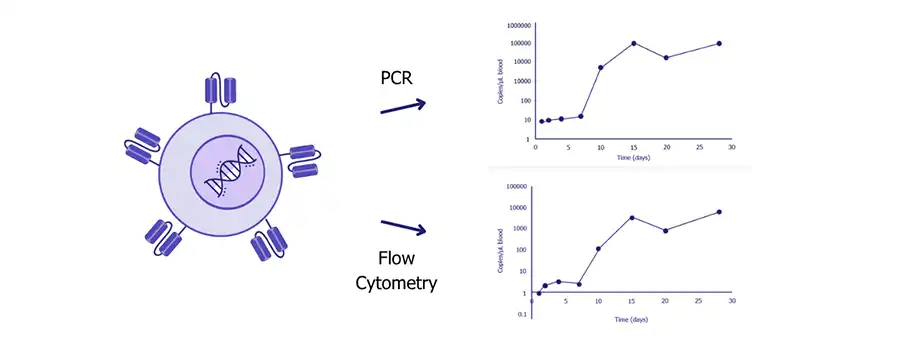
Cell therapy drugs can be monitored using molecular or phenotypic methods. PCR-based methods are recommended for the former, due to more robust methodology and greater sensitivity in monitoring the cell therapy in matrices where they are expected to be in low abundance. However, PCR does not provide direct evidence of CAR expression, which is the advantage of using a flow cytometric approach.
Immunogenicity Assessment
For cell therapies, immunogenicity assessment follows a similar strategy as biologics for anti-drug antibody (ADA) evaluation. Plate-based or cell-based assays can be used, the choice determined by the risk assessment of the drug and the availability of critical reagents. Since the CAR is expressed on the cell surface, flow cytometric assays might be preferred on the basis that the structural conformation and surface presentation might yield a truer assessment of immunogenicity. A plate-based assay might prove to be more robust, but requires recombinant CAR protein, or at least the extracellular domain. The challenge is that a plate-based assay may present a denatured or non-native form of the receptor and thus may not detect true anti-drug antibodies that may be present in the patient sample.
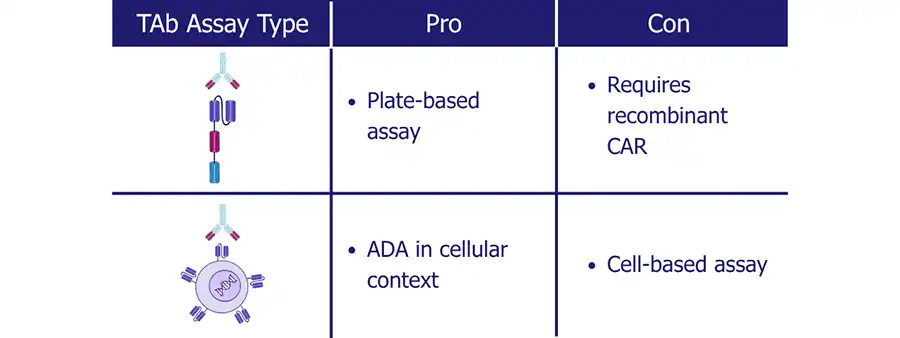
Either format will provide information on the total anti-drug antibodies (TAb) against the CAR. The need for a neutralizing antibody (NAb) assay may not be required unless data from the cellular kinetic study or efficacy evaluation suggests an immune response component. For immunogenicity assessments in general, not just for CAR-T modalities, there is a growing trend to rely on kinetics and pharmacodynamics rather than Nab (Partridge et al, AAPS J 2025; https://doi.org/10.1208/s12248-025-01118-6). This is because the former evaluations are reflective of in vivo performance after administration, rather than on an in vitro experimental system that may not represent true immunogenic response. If a NAb assay is deemed to be necessary, the potency assay used to characterize the drug can be repurposed by preincubation with patient serum to detect neutralization of the potency readout.
As with gene therapy programs, cellular immunogenicity evaluation should be considered using an ELISpot assay. Exposure of patient PBMCs to a peptide population derived from the recombinant CAR and subsequent IFN-g secretion can provide a more complete picture of a developing immune response after drug administration. Whether such samples need to be analyzed routinely or collected and stored is a matter of risk assessment and the treatment population.
Bioanalytical Life Cycle Management
Bioanalysis of CAR-T cell therapies poses some challenges but these are primarily due to the nature of the drug, rather than the type of assays needed. Life cycle management of the methods, implementing additional assays as needed, will ensure that the bioanalytical data set supports internal decision-making and stands up to regulatory review.

Need bioanalytical expertise for your cell therapy program?
Additional Resources


In Vitro Cytotoxicity Assessment of CAR-T Cells Poster

in vitro Potency Assays to Evaluate Early Activation Poster
CAR-T Cell Cytotoxicity Using Flow Cytometry Poster