Mass Spectrometry-Based Characterization of AAV: HCP Profiling, Peptide Mapping, and Metabolomic Insights
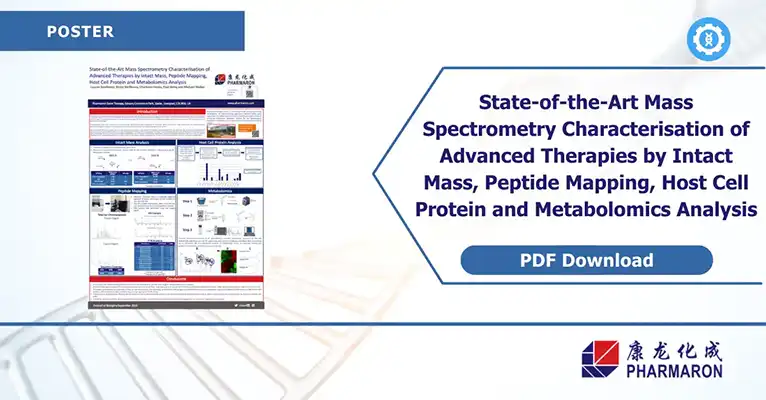
Poster Authors:
Lauren Tomlinson, Kirsty McManus, Charlotte Hands, Paul Getty and Michael Walker
Pharmaron Gene Therapy, Estuary Commerce Park, Speke, Liverpool, L24 8RB, UK
Mass Spectrometry-Driven AAV Quality Optimization
As AAV-based gene therapies advance toward clinical application, detailed AAV characterization becomes essential for regulatory success and therapeutic consistency. This Pharmaron study employs state-of-the-art mass spectrometry (MS) techniques to examine critical quality attributes (CQAs), including host cell protein (HCP) profiling, intact mass analysis, peptide mapping, and metabolomics analysis.
Two distinct AAV serotypes were analyzed using advanced LC-MS systems, including Waters Xevo G2-XS and Thermo Orbitrap Fusion Lumos platforms. The workflows offer precise insights into capsid structure, residual impurities, and process-related metabolites that can impact yield and efficacy.
AAV Quality Assessment: Beyond the Surface:
Key elements of the characterization include:
- Intact Mass Analysis: Enabled stoichiometry resolution of VP1, VP2, and VP3 capsid proteins, including N-terminal truncations and acetylation.
- Peptide Mapping: Combined digestion with pepsin and trypsin achieved >98% sequence coverage, supporting PTM profiling (acetylation, oxidation, deamidation).
- Host Cell Protein Identification: Mass spec-based quantification detected HCPs at low ng/mg AAV levels, surpassing ELISA by providing identity and relative abundance.
- Metabolomics Analysis: Principal component and multivariate analyses revealed distinct metabolic signatures correlating with AAV productivity across multiple timepoints.
Capabilities
These techniques allow developers to monitor and de-risk both upstream and downstream variables influencing AAV safety, yield, and regulatory readiness.
Gain detailed insight into Pharmaron’s MS-based AAV platform. Download the poster presented at Festival of Biologics to explore how deep characterization can drive yield and compliance.