ARVO 2025 Highlights in CGT Ophthalmology Innovation
Capabilities
Cell and Gene Therapy Ophthalmology Breakthroughs Unveiled at ARVO 2025
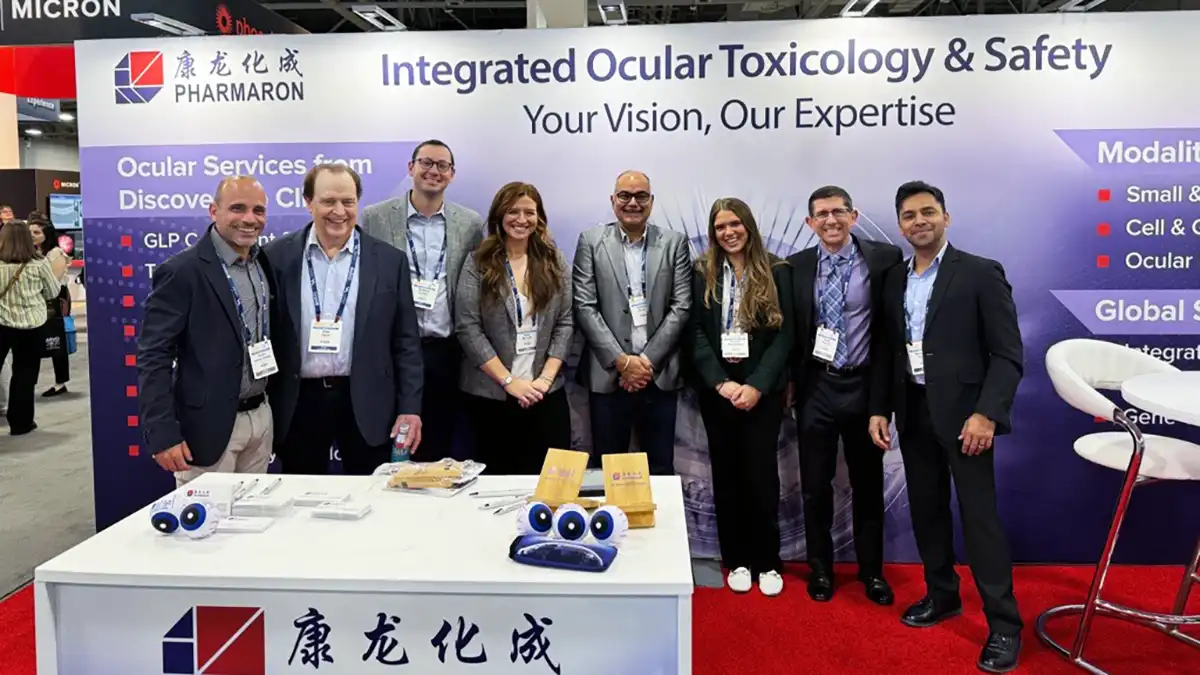
Pharmaron was proud to participate in the ARVO 2025 Annual Meeting, held in Salt Lake City from May 4th to 7th. We were delighted to welcome attendees to Booth 1212 and connect with fellow experts in the field of ophthalmology. The event was a tremendous success for our team, offering a valuable platform to showcase our comprehensive capabilities in ocular disease models, safety and toxicology studies, ocular device development, cell and gene therapy (CGT) support, as well as CMC and bioanalytical services.
The ARVO 2025 Annual Meeting is the premier gathering for eye and vision scientists from across the globe to share the latest research findings and collaborate on innovative solutions. Each year, it plays a key role in shaping the future of vision and ophthalmology by hosting innovative talks, creating a space to share new technologies, and fostering collaborative opportunities.
Pharmaron contributed to the scientific program with a presentation entitled “Preclinical Cell and Gene Therapy for Inherited Retinal Diseases: Frontiers and Advances”, hosted by Dr. Xiaohui Zhang, on May 6th.
In addition, Pharmaron also presented three posters:

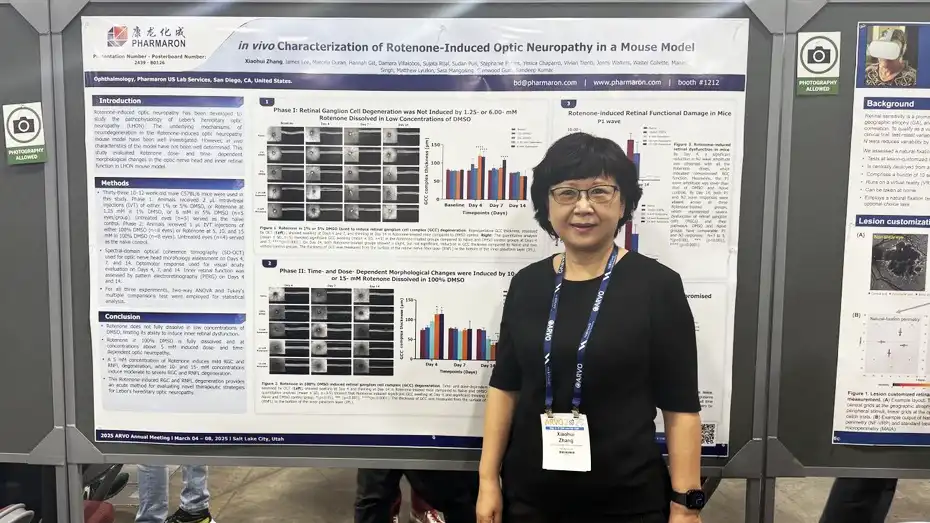
in vivo characterization of Rotenone-induced optic neuropathy in a mouse model
Presented by Dr. Xiaohui Zhang
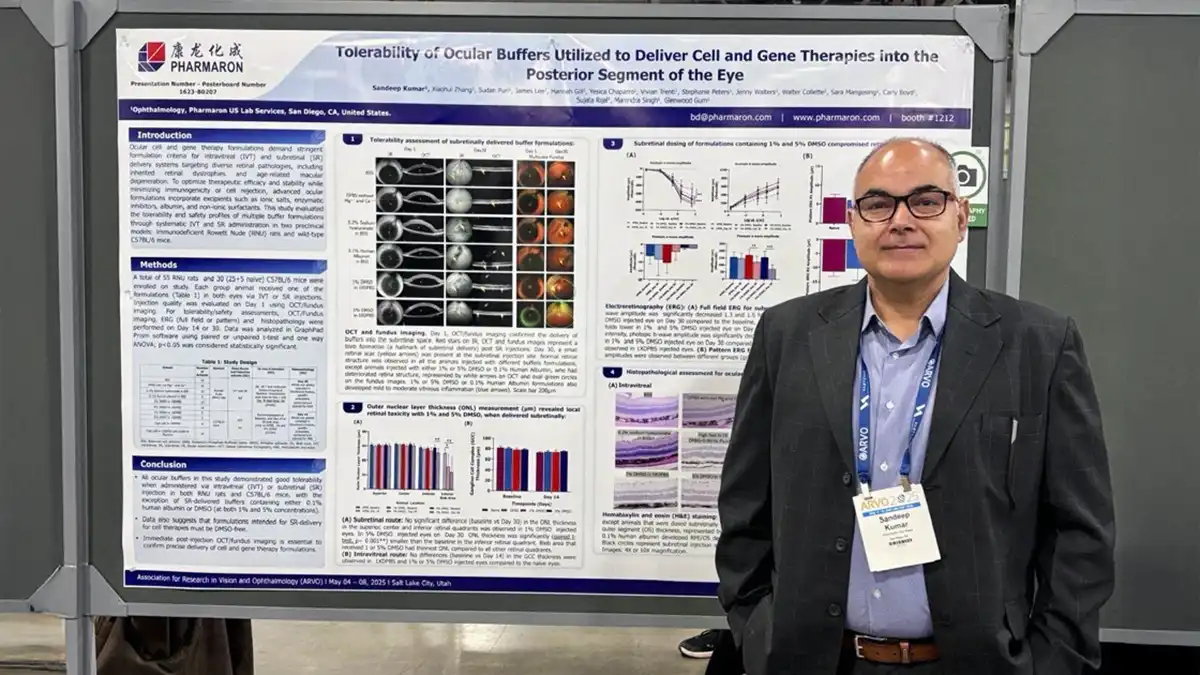
Tolerability of ocular buffers utilized to deliver cell and gene therapies into the posterior segment of the eye
Presented by Dr. Sandeep Kumar

Age-related Changes in Anterior Segment Biometric Measurements in New Zealand White Rabbits
Presented by Dr. Sudan Puri
A poster presenter and long-time ARVO participant, Dr. Sandeep Kumar, gave an overview of our poster involvement, “In collaboration with Dr. Arun Singh, Department of Ophthalmic Oncology, Cole Eye Institute, Cleveland, OH, USA, we explored suprachoroidal (SC) route of delivery for intraocular chemotherapy specifically for treatment of retinoblastoma (RB) to assess whether therapeutic levels of topotecan could be achieved within retina and choroid by suprachoroidal injection of topotecan and to assess its in vivo safety. In a podium presentation at ARVO 2025, we demonstrated that SC injection of topotecan (up to 100 µg/eye) reached the retina and was non-toxic. This study encourages us to perform preclinical efficacy studies in rabbit RB. This will be a breakthrough to treat RB patients in countries where patients cannot afford expensive therapy for this disease.
In collaboration with Abeona, Cleveland, OH, USA, my team showed that ABO-503, when administered subretinally to Rs1-/Y mice at an early stage of disease, preserves normal retinal structure and function. This was apparent even in quadrants of the retina that were opposite the injection site and was corroborated by widely distributed RS1. The preservation of cone function in treated animals warrants the investigation of the therapeutic benefit of ABO-503 to XLRS patients in human clinical trials.“
In a poster presentation, Dr Sandeep showed that most ocular buffers have good tolerability when administered via intravitreal (IVT) or subretinal (SR) injection in both RNU rats and C57BL/6 mice, except SR-delivered buffers containing either 0.1% human albumin or DMSO (at both 1% and 5% concentrations). Data also suggests that formulations intended for SR-delivery for cell therapies must be DMSO-free. In addition, our team demonstrated that Immediate post-injection OCT/fundus imaging is essential for confirming the precise delivery of cell and gene therapy formulations.
In a poster presentation, Dr Sudan showed the use of The Anterion (Heidelberg Engineering) for anterior segment biometric measurements in NZW rabbits. This study suggests that anterior segment biometric parameters should be taken into consideration for anterior segment studies designed to evaluate the tolerability and efficacy of ocular devices and test articles.
In a poster presentation, Dr. Xiaohui presented In Vivo Characterization of Rotenone-Induced Optic Neuropathy in a Mouse Model, which provided an acute method for evaluating novel therapeutic strategies for Leber’s hereditary optic neuropathy.
In addition, Dr. Xiaohui’s presentation in the exhibitor court provided guidelines, study designs, available models, as well as Frontiers and Advances in the Preclinical Cell and Gene Therapies for Inherited Retinal Diseases.”

Manindra Singh, Business Development Representative, also attended ARVO and noted,
“ARVO 2025 showcased the future of eye care, unveiling groundbreaking innovations in retinal and corneal disease treatments, including AI-based prediction and novel drug delivery platforms. I was proud to represent the Pharmaron Ophthalmology Department, leveraging our expertise in preclinical ocular product development, surgery and delivery routes, ocular disease models, and advanced imaging modalities for safety and efficacy evaluation. Our teams’ presentations on preclinical models relevant to optic neuropathy, ocular hypertension, and neuroprotection, and consideration for gene/cell therapy research aligned perfectly with current industry trends. Overall, ARVO 2025 provided me with a platform to engage with industry personnel to discuss potential collaboration and an opportunity to interface with innovation in novel and regenerative approaches for ocular disease management, sensitive imaging technologies, and deeper biological understanding, alongside industry trends crucial for translating research into life-changing therapies.”
As the ophthalmology landscape continues to evolve, Pharmaron remains at the forefront, delivering scientific excellence and integrated services. We thank everyone who visited us at ARVO 2025 and look forward to continuing the conversation.